Glow + KLOW Research Blends: Exploring Multi-Peptide Formulations in Research
As peptide research continues to evolve, investigators have shown increasing interest in combination formulations that bring multiple compounds together within a single research framework. Among these emerging approaches are Glow + KLOW research blends, which combine several well-known peptides that have individually attracted attention across a variety of scientific disciplines.
Understanding the rationale behind multi-peptide research blends requires examining the individual components, their research history, and the broader considerations involved when evaluating complex peptide formulations.
What Are Glow + KLOW Research Blends?
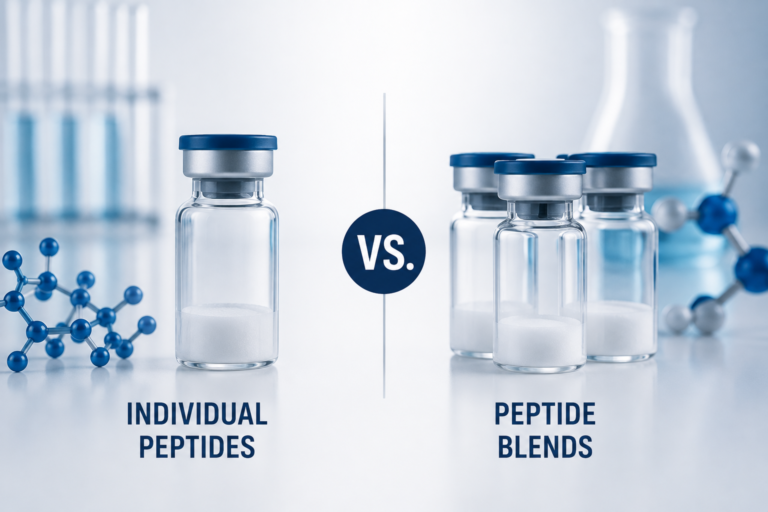
Glow + KLOW research blends are multi-peptide formulations designed for laboratory and research applications. Rather than focusing on a single peptide, these blends combine multiple compounds that have been studied for their distinct biological characteristics and molecular interactions.
Researchers may investigate whether multiple peptides interact with distinct or overlapping biological pathways under controlled laboratory conditions.
It is important to note that peptide blends are not intended to imply enhanced outcomes or synergistic effects unless such relationships have been specifically demonstrated through controlled scientific investigation.
Common Components Found in Glow + KLOW Research Blends
While formulations may vary, Glow + KLOW research blends often contain peptides that have generated significant scientific interest individually.
GHK-Cu
GHK-Cu, also known as copper tripeptide-1, is a naturally occurring peptide-copper complex that has been studied extensively in cellular and molecular biology research.
Scientific investigations involving GHK-Cu have explored topics such as:
- Cellular signaling mechanisms
- Gene expression pathways
- Extracellular matrix research
- Tissue remodeling processes
Researchers continue to examine the broad biological activity associated with this peptide across various laboratory models.
BPC-157
BPC-157 is a synthetic peptide derived from a protein sequence originally identified within gastric proteins.
Research involving BPC-157 has examined:
- Cellular communication pathways
- Angiogenic signaling mechanisms
- Gastrointestinal research models
- Tissue response processes
The peptide remains an active area of preclinical investigation, although many questions regarding its mechanisms continue to be explored.
TB-500 (Thymosin Beta-4 Fragment)
TB-500 is a synthetic peptide modeled after naturally occurring thymosin beta-4.
Research interest surrounding TB-500 often focuses on:
- Cell migration processes
- Cytoskeletal organization
- Actin regulation
- Cellular movement and communication
Its role within experimental systems has made it a frequently discussed peptide in regenerative biology research.
KPV
KPV is a naturally occurring tripeptide fragment derived from alpha-melanocyte-stimulating hormone (α-MSH).
Scientific studies involving KPV have investigated:
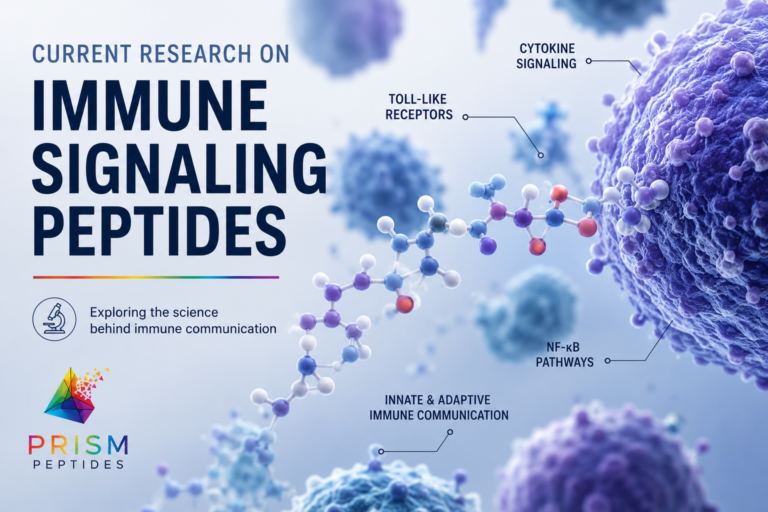
- Immune signaling pathways
- Cellular communication mechanisms
- Gastrointestinal research models
- Inflammatory signaling processes
Researchers continue to evaluate how this peptide interacts with various molecular pathways under laboratory conditions.
Why Researchers Study Peptide Blends
Multi-peptide formulations provide an opportunity to investigate multiple biological pathways within a single research framework.
Potential areas of scientific interest include:
Pathway Interactions
Researchers may examine whether peptide compounds influence overlapping or complementary signaling pathways.
Formulation Stability
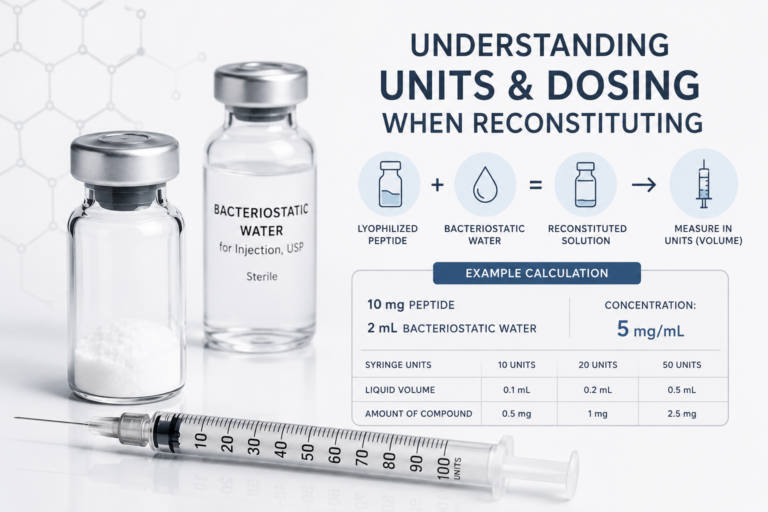
Combination blends can be evaluated for storage characteristics, reconstitution behavior, and peptide integrity under controlled conditions.
Experimental Design
Using multi-peptide formulations may allow researchers to investigate several compounds within a single experimental framework. Appropriate controls remain essential for distinguishing the contribution of individual peptides from observations associated with the formulation as a whole.
Comparative Research
Researchers can compare findings generated from individual peptides with observations obtained from blended formulations.
Important Considerations for Multi-Peptide Research
As interest in peptide blends continues to grow, scientific rigor remains essential.
Researchers should consider:
- Peptide purity and analytical testing
- Manufacturing consistency
- Storage and handling procedures
- Stability characteristics
- Appropriate laboratory controls
- Reproducibility of experimental results
Careful experimental design helps ensure that observations can be accurately interpreted and replicated.
The Importance of Quality Control
Because peptide formulations contain multiple active components, quality assurance becomes particularly important.
Research-grade peptide products are commonly evaluated through analytical methods such as:
- High-performance liquid chromatography (HPLC)
- Mass spectrometry
- Identity verification testing
- Purity assessment procedures
These testing methods help confirm that researchers are working with materials that meet established specifications.
Looking Ahead
Glow + KLOW research blends represent an example of the growing interest in multi-peptide formulations within scientific research. By combining several well-known peptides into a single preparation, researchers can explore complex biological systems while continuing to investigate the individual characteristics of each component.
As peptide science advances, ongoing research will continue to expand our understanding of how these compounds function within laboratory settings and how combination formulations may contribute to future scientific knowledge.
We welcome suggestions for future educational and research-focused blog content. Send your ideas to [email protected].
Research Use Disclaimer: This content is provided strictly for informational and research purposes only. It does not constitute medical advice, diagnosis, treatment guidance, dosing information, or administration instructions. Products referenced by Prism Peptides are research-grade lyophilized powders that may require reconstitution as part of controlled laboratory procedures. They are intended solely for laboratory research and are not for human, veterinary, diagnostic, therapeutic, or household use.
Prism Peptides is not a medical provider, compounding pharmacy under Section 503A, or outsourcing facility under Section 503B. Statements concerning research compounds have not been evaluated by the U.S. Food and Drug Administration and are not intended to diagnose, treat, cure, or prevent any disease. Purchasers must be 21 years of age or older and must follow all applicable laws, regulations, safety requirements, and institutional research protocols.