
Thymosin Alpha-1 Research Overview: Structure, Mechanisms, and Scientific Interest
Thymosin Alpha-1 (Tα1) is a naturally occurring peptide that has attracted significant scientific interest because of its role in immune…
Interest in cognitive performance, learning, memory, and neuroplasticity has led researchers to investigate a wide range of compounds and biological…
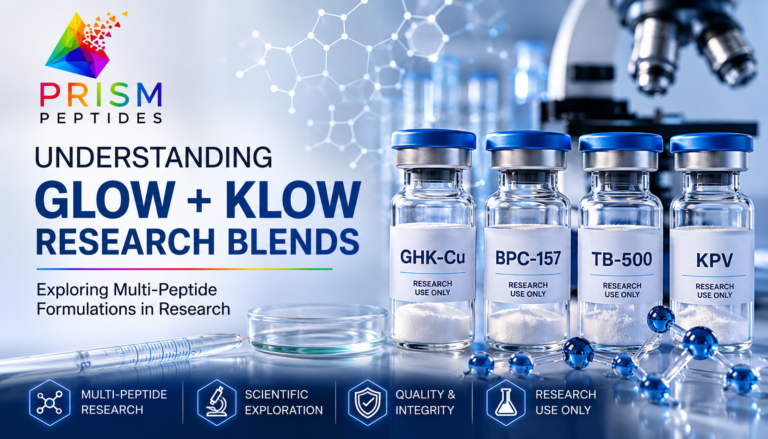
As peptide research continues to evolve, investigators have shown increasing interest in combination formulations that bring multiple compounds together within…
Nicotinamide adenine dinucleotide (NAD+) is one of the most extensively studied coenzymes in cellular biology. Present in virtually every living…
Thymalin is a thymus-derived polypeptide complex that has been studied in connection with immune regulation, thymic biology, cellular differentiation, and…
BPC-157 and TB-500 are frequently discussed together in peptide research, particularly in conversations involving tissue biology, cellular migration, angiogenesis, and…
Selank and Semax are synthetic peptides that appear frequently in discussions of neuropeptide and cognitive research. Although they are sometimes…
Reconstitution and concentration are important concepts in laboratory peptide research, but terminology surrounding these processes can sometimes create confusion. Terms…
Peptide quality starts long before a product reaches a lab or supplier. This post explores sourcing, testing, and transparency, helping readers understand what matters when evaluating peptide quality without promoting or selling products.