What Researchers Are Exploring About Recovery Peptides
Interest in peptides has grown significantly over the past decade as researchers continue investigating their roles in cellular signaling and regenerative biology. Among the many areas of study, recovery peptides have become a particularly active field of research because of their potential involvement in tissue repair, inflammation, and recovery processes. A recent comprehensive review examines the diverse roles of peptides in experimental wound-healing research.
While many peptides are being studied, it is important to recognize that research remains ongoing. Scientists continue working to better understand how these molecules function at the cellular level, how they interact with biological pathways, and what their broader implications may be within laboratory settings.
This article provides an overview of what researchers are currently exploring about recovery peptides and why they continue to receive scientific attention.
What Are Recovery Peptides?
The phrase “recovery peptides” is an informal research term used to describe peptides that are being investigated for their potential roles in biological processes associated with tissue maintenance, repair, and regeneration.
Many peptides occur naturally as chains of amino acids, while others are synthetically designed or derived from naturally occurring peptide sequences. Peptides can perform a wide variety of biological functions, including roles in cellular signaling and regulation.
Rather than representing a single class of compounds, recovery peptides encompass multiple research peptides that scientists investigate for various aspects of regenerative biology.
Why Researchers Study Recovery Peptides
Recovery is a complex biological process involving multiple systems working together after physical stress or tissue damage.
Researchers have investigated specific peptides in experimental systems involving processes such as:
- Cellular signaling
- Tissue remodeling
- Inflammatory responses
- Angiogenesis
- Collagen production
- Muscle regeneration
- Connective tissue biology
Understanding these mechanisms may provide valuable insight into how biological repair processes are regulated under controlled laboratory conditions.
Areas of Scientific Interest
Tissue Repair
Tissue repair is a complex biological process involving inflammation, cellular proliferation and migration, extracellular matrix deposition, angiogenesis, and tissue remodeling. Researchers have investigated various bioactive peptides within experimental models of these processes, including studies involving skin and other tissue systems.
Much of this work remains preclinical, and findings associated with one peptide or experimental model should not be generalized to other compounds or biological systems.
Skeletal Muscle Regeneration Research
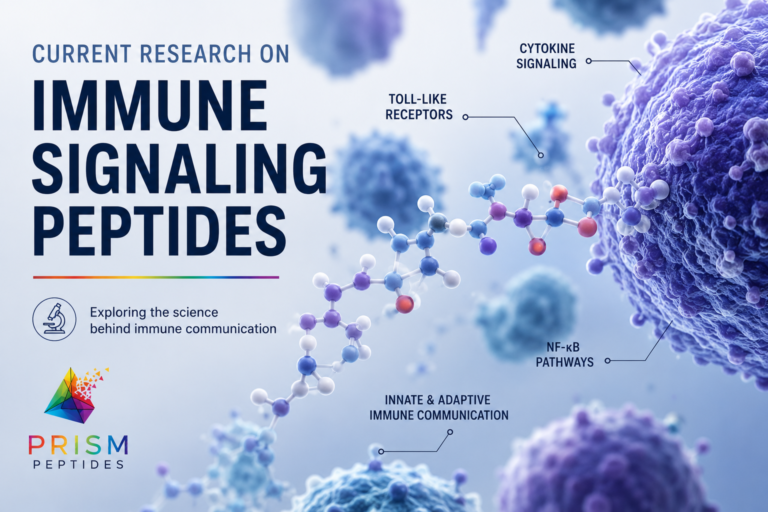
Skeletal muscle regeneration involves coordinated interactions among muscle stem cells, immune cells, extracellular matrix components, growth factors, and intracellular signaling pathways.
Researchers continue studying how these systems respond to tissue damage and mechanical stress and how signaling molecules may influence experimental models of muscle repair and adaptation. Research in this area is intended to improve understanding of underlying biological mechanisms rather than establish outcomes for unapproved research compounds.
Inflammatory Response
Inflammation is an important component of the biological response to tissue injury.
Researchers investigate how inflammatory signaling changes throughout different phases of tissue repair and whether specific peptides interact with these pathways under experimental conditions.
These studies focus on understanding biological processes rather than evaluating treatments.
Connective Tissue Biology
Connective tissues such as tendons and ligaments contain highly organized extracellular matrices in which collagen plays an important structural role. Following injury, changes in extracellular matrix composition, collagen organization, cellular activity, and signaling contribute to the remodeling process.
Researchers continue studying these mechanisms to better understand the biology of connective tissue repair.
Regenerative Biology
Many peptide studies contribute to the broader field of regenerative biology.
Researchers investigate how peptides influence cell signaling, tissue organization, and communication between different cell types involved in repair processes.
These investigations help expand scientific knowledge regarding normal biological function.
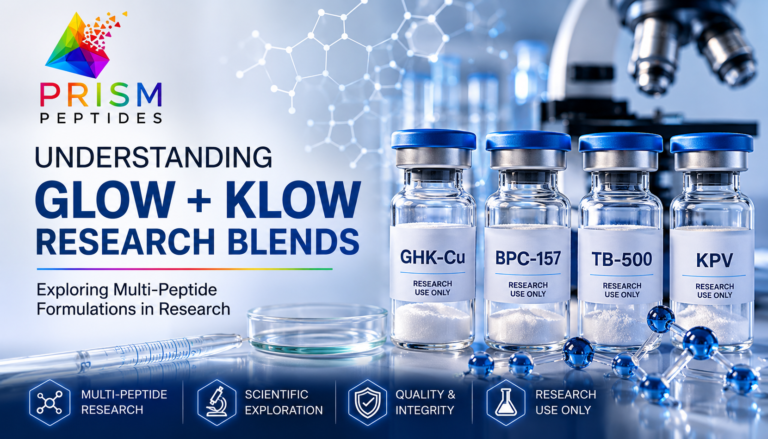
Common Peptides Studied in Recovery Research
Several peptides frequently appear in published scientific literature involving recovery-related research.
Examples include:
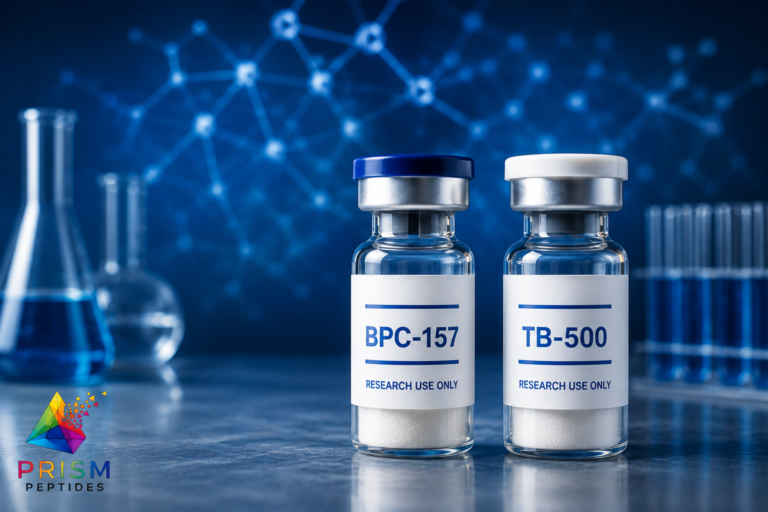
It is important to distinguish between specific synthetic peptide fragments and the naturally occurring peptides from which they may be derived. Findings involving full-length thymosin beta-4, for example, should not automatically be attributed to TB-500.
Each peptide possesses distinct structural characteristics and is investigated for different biological mechanisms. Importantly, ongoing research seeks to understand these compounds within controlled experimental environments rather than establish therapeutic use.
Why Research Continues to Expand
Advances in molecular biology, proteomics, imaging technologies, and cellular analysis have expanded researchers’ ability to investigate peptide structure, signaling, and biological activity.
As additional laboratory studies are completed, researchers refine their understanding of how peptides participate in complex biological systems.
The Importance of Responsible Research
Because peptide research continues to evolve, scientific findings require careful interpretation. Individual studies represent only one part of a larger evidence base, and results obtained from cell cultures or animal models do not automatically predict outcomes in humans.
Experimental design, appropriate controls, transparent reporting, replication, and independent validation all contribute to the reliability of scientific findings. The National Institutes of Health identifies rigor and reproducibility as fundamental components of biomedical research.
Conclusion
Peptide research continues to contribute to scientific understanding of cellular signaling, tissue remodeling, inflammation, extracellular matrix biology, and regenerative processes. Individual peptides differ substantially in their structures, mechanisms, and levels of supporting evidence, making compound-specific evaluation essential.
As the scientific literature expands, careful distinction between preclinical observations and established human evidence remains important. Continued research, replication, and transparent reporting will help clarify how specific peptides interact with biological systems under controlled experimental conditions.
We welcome suggestions for future educational and research-focused blog content. Send your ideas to [email protected].
Research Use Disclaimer: This content is provided strictly for informational and research purposes only. It does not constitute medical advice, diagnosis, treatment guidance, dosing information, or administration instructions. Products referenced by Prism Peptides are research-grade lyophilized powders that may require reconstitution as part of controlled laboratory procedures. They are intended solely for laboratory research and are not for human, veterinary, diagnostic, therapeutic, or household use.
Prism Peptides is not a medical provider, compounding pharmacy under Section 503A, or outsourcing facility under Section 503B. Statements concerning research compounds have not been evaluated by the U.S. Food and Drug Administration and are not intended to diagnose, treat, cure, or prevent any disease. Purchasers must be 21 years of age or older and must follow all applicable laws, regulations, safety requirements, and institutional research protocols.