Peptide Sourcing, Quality, and What to Look For
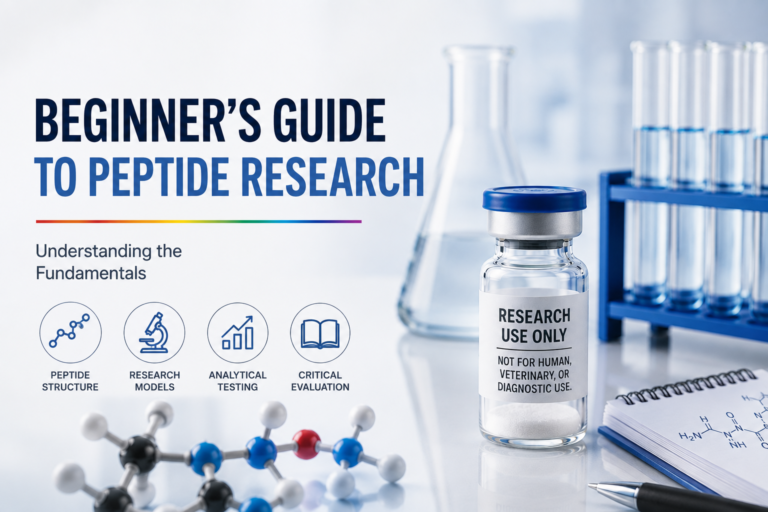
As scientific interest in peptides continues to grow, questions surrounding sourcing, analytical characterization, purity, and quality have become increasingly important. This guide examines how peptide materials may be evaluated and what analytical and documentation factors researchers can consider when assessing research materials.
This content is for informational purposes only and is not medical advice.
Why Peptide Sourcing Matters
Peptide materials identified by the same compound name may differ in purity, identity verification, impurity profiles, stability, and analytical documentation depending on manufacturing and quality-control processes.
For researchers, understanding how a peptide has been characterized can therefore be an important part of evaluating research materials.
Purity and Third-Party Testing
Independent analytical testing can provide researchers with additional information about the identity and purity of peptide materials. Depending on the analytical objective, peptide characterization may involve methods such as high-performance liquid chromatography (HPLC), liquid chromatography-mass spectrometry (LC-MS), or other validated analytical techniques.
Depending on the analytical objective, testing may provide information about:
- Peptide identity
- Chromatographic purity
- Molecular mass and sequence-related information
- Relevant impurities or other quality attributes, depending on the testing performed
Testing results may be summarized in a Certificate of Analysis (COA). A COA can provide useful documentation, but its value depends on the tests performed, the analytical methods used, the laboratory conducting the analysis, and whether the results correspond to the specific material or lot being evaluated. A COA should therefore be reviewed as analytical documentation rather than as a guarantee of safety or research outcomes.
Manufacturing Standards and Handling
Peptide stability can be influenced by environmental and formulation conditions, with the relevant factors varying by peptide.
Factors such as temperature, moisture, oxidation, light exposure, formulation, and storage conditions may affect the stability of particular peptide materials.
Important handling considerations may include:
- Documented storage conditions
- Protection from relevant environmental exposures
- Packaging appropriate for maintaining material integrity during transport and storage
Appropriate storage and handling conditions depend on the characteristics and stability requirements of the specific peptide being studied.
Labeling and Transparency
Clear labeling and accessible documentation can help researchers identify and evaluate research materials.
Key information may include:
- Precise peptide identification
- Declared quantity or material specifications
- Lot or batch identification
- Access to applicable analytical documentation
Lot or batch identification can be particularly useful when reviewing analytical documentation because it helps establish whether testing information corresponds to the specific material being evaluated.
Education Over Unsupported Claims
Research peptides are complex biological compounds, and scientific findings should be interpreted within the context of the specific compound, experimental model, and available evidence. Claims that extend beyond the supporting research should be approached critically.
Educational resources that distinguish established findings from preliminary or preclinical observations provide greater scientific value than unsupported promotional claims. Responsible research begins with accurate information, appropriate documentation, and recognition of the limitations of available evidence.
Evaluating Peptide Suppliers
When evaluating research peptide materials and their accompanying documentation, useful questions may include:
- Is independent analytical testing available?
- Is testing associated with a specific lot or batch?
- Are the analytical methods clearly identified?
- Are Certificates of Analysis accessible?
- Are storage and handling requirements documented?
- Is peptide identity and material quantity clearly labeled?
These factors can help researchers evaluate the transparency and analytical documentation associated with research materials.
How This Guide Fits With Peptide Education
This post is designed to complement broader educational content about peptides, including explanations of what peptides are, how they function, and common areas of research interest.
Understanding sourcing, analytical quality considerations, and documentation adds an important layer to responsible peptide research.
Final Thoughts
As peptide research continues to expand, transparency, analytical characterization, and clear documentation remain important considerations when evaluating research materials. Understanding how peptide identity, purity, stability, and other quality attributes are assessed can help researchers interpret the information provided with a research material.
No individual analytical result or Certificate of Analysis provides a complete assessment on its own. Careful review of testing methods, lot-specific documentation, handling requirements, and the limitations of available data remains an important part of responsible research.
We welcome suggestions for future educational and research-focused blog content. Send your ideas to [email protected].
Research Use Disclaimer: This content is provided strictly for informational and research purposes only. It does not constitute medical advice, diagnosis, treatment guidance, dosing information, or administration instructions. Products referenced by Prism Peptides are research-grade lyophilized powders that may require reconstitution as part of controlled laboratory procedures. They are intended solely for laboratory research and are not for human, veterinary, diagnostic, therapeutic, or household use.
Prism Peptides is not a medical provider, compounding pharmacy under Section 503A, or outsourcing facility under Section 503B. Statements concerning research compounds have not been evaluated by the U.S. Food and Drug Administration and are not intended to diagnose, treat, cure, or prevent any disease. Purchasers must be 21 years of age or older and must follow all applicable laws, regulations, safety requirements, and institutional research protocols.