Thymosin Alpha-1 Research Overview: Structure, Mechanisms, and Scientific Interest
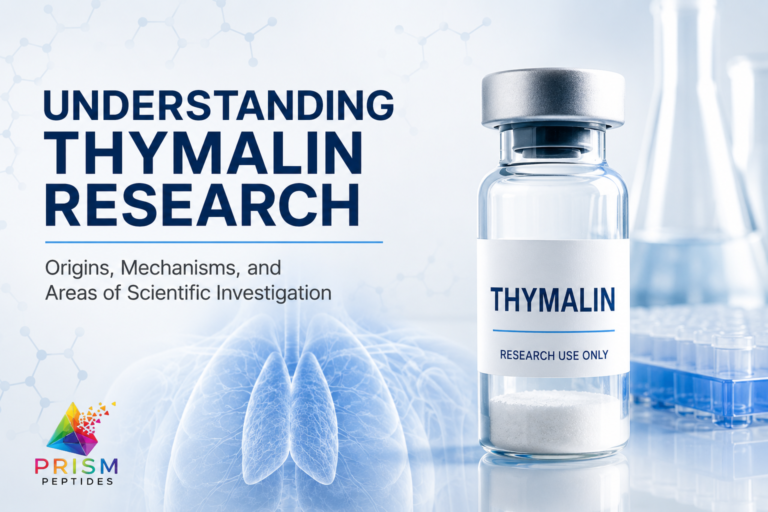
Thymosin Alpha-1 (Tα1) is a naturally occurring peptide that has attracted significant scientific interest because of its role in immune system biology. Originally isolated and characterized from thymic tissue in the 1970s, this 28-amino acid peptide has been studied for decades in connection with immune regulation and cellular signaling.
Although research involving Thymosin Alpha-1 spans numerous scientific disciplines, much of the current literature focuses on its influence within immune regulation, inflammatory signaling, and cellular responses under experimental conditions.
This overview summarizes current research surrounding Thymosin Alpha-1, its biological characteristics, and why it continues to be investigated in laboratory settings.
What Is Thymosin Alpha-1?
Thymosin Alpha-1 is a naturally occurring 28-amino acid peptide originally identified in thymic tissue. It corresponds to an N-terminal region of the precursor protein prothymosin alpha and has been investigated extensively for its immunoregulatory properties.
Unlike larger thymic proteins, Tα1 consists of only 28 amino acids arranged in a highly conserved sequence. Researchers have noted that this relatively small peptide participates in numerous signaling processes that help coordinate interactions between components of the immune system.
Its biological activity and interactions with immune signaling pathways have made Tα1 an important subject of immunology research.
Biological Role
Research has examined Tα1 as an immunomodulatory peptide with reported interactions across both innate and adaptive immune pathways.
Laboratory studies have examined its interactions with various immune cell populations, including:
- T lymphocytes
- Dendritic cells
- Natural killer (NK) cells
- Macrophages
Scientists continue investigating how these interactions may influence cellular communication, immune signaling networks, and the coordination of innate and adaptive immune responses under controlled laboratory conditions.
It is important to note that these investigations remain an area of active research, and many biological mechanisms continue to be explored.
Mechanisms Studied in Research
Several mechanisms have been investigated to better understand how Tα1 participates in immune biology.
Immune Cell Communication
Researchers have explored how Tα1 may influence communication between different immune cell populations through signaling molecules involved in cellular coordination.
Understanding these pathways helps researchers better characterize normal immune regulation.
Toll-Like Receptor Signaling
Scientific literature has examined interactions between Tα1 and Toll-like receptor signaling pathways, which form an important component of innate immune recognition and downstream cellular signaling.
Experimental research has associated Tα1 with several TLR-related pathways, although its precise mechanisms of action remain an area of continued investigation.
Cytokine Regulation
Experimental studies have also evaluated relationships between Tα1 and cytokine and chemokine signaling under different research conditions.
Because cytokines and chemokines contribute to communication among immune cells, these interactions remain an important area of investigation when examining the broader immunological activity associated with Tα1.
Immune Homeostasis
Another area of scientific interest involves immune homeostasis, referring to the balance maintained within complex immune signaling systems.
Researchers have investigated how Tα1 may influence regulatory and tolerogenic immune pathways that contribute to immune homeostasis.
Current Areas of Scientific Research
Thymosin Alpha-1 remains the subject of research across multiple scientific disciplines.
Current areas of investigation include:
- Immune system biology
- Cellular signaling pathways
- Innate immune mechanisms
- Adaptive immune responses
- Inflammatory signaling
- Aging and immunosenescence research
- Host-pathogen interaction models
- Vaccine and adjuvant research models
These areas encompass laboratory, preclinical, and clinical research. The strength and applicability of evidence vary considerably by research question, population, and study design, making it important to evaluate findings within their specific scientific context.
Why Researchers Continue Studying Thymosin Alpha-1
Several characteristics contribute to continued scientific interest in Thymosin Alpha-1:
- Its 28-amino-acid sequence has been characterized for decades
- Its biological activity has been investigated across multiple immune-cell populations
- Research encompasses both innate and adaptive immune pathways
- Mechanistic studies have examined Toll-like receptor, cytokine, and regulatory signaling
- Important questions remain regarding its interactions within complex immune networks
Together, these characteristics have made Tα1 a continuing subject of investigation across immunology and related fields.
Research Considerations
Although the scientific literature surrounding Tα1 spans several decades, findings vary considerably by experimental model, study design, population, and research objective. Evidence from cell-based studies, animal models, and clinical investigations should therefore be interpreted according to the conditions under which it was generated.
Ongoing research continues to examine the molecular mechanisms associated with Tα1 and its interactions within complex immune networks. Careful distinction between mechanistic findings, preclinical observations, and clinical evidence remains important when evaluating the literature.
Conclusion
Thymosin Alpha-1 has been studied for decades as a naturally occurring peptide associated with immune regulation and cellular signaling. Research has examined its interactions with innate and adaptive immune pathways, Toll-like receptor signaling, cytokine activity, and multiple immune-cell populations.
As scientific research continues to evolve, studies involving Tα1 contribute to a broader understanding of immune-system biology and the complex signaling networks involved in cellular communication and regulation. Interpretation of this literature requires attention to study design, experimental context, and the distinction between mechanistic, preclinical, and clinical evidence.
We welcome suggestions for future educational and research-focused blog content. Send your ideas to [email protected].
Research Use Disclaimer: This content is provided strictly for informational and research purposes only. It does not constitute medical advice, diagnosis, treatment guidance, dosing information, or administration instructions. Products referenced by Prism Peptides are research-grade lyophilized powders that may require reconstitution as part of controlled laboratory procedures. They are intended solely for laboratory research and are not for human, veterinary, diagnostic, therapeutic, or household use.
Prism Peptides is not a medical provider, compounding pharmacy under Section 503A, or outsourcing facility under Section 503B. Statements concerning research compounds have not been evaluated by the U.S. Food and Drug Administration and are not intended to diagnose, treat, cure, or prevent any disease. Purchasers must be 21 years of age or older and must follow all applicable laws, regulations, safety requirements, and institutional research protocols.