
Glow + KLOW Research Blends: Exploring Multi-Peptide Formulations in Research
As peptide research continues to evolve, investigators have shown increasing interest in combination formulations that bring multiple compounds together within…
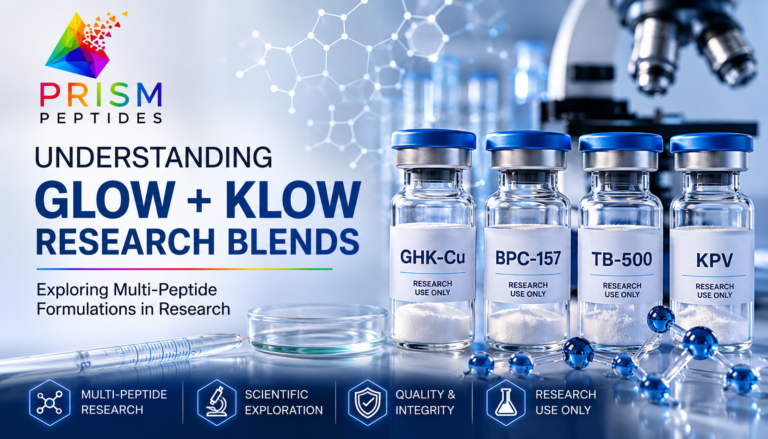
As peptide research continues to evolve, investigators have shown increasing interest in combination formulations that bring multiple compounds together within…

Nicotinamide adenine dinucleotide (NAD+) is one of the most extensively studied coenzymes in cellular biology. Present in virtually every living…

One of the questions I hear fairly often is, “What should I ask my doctor if I’m interested in learning…
Thymalin is a thymus-derived polypeptide complex that has been studied in connection with immune regulation, thymic biology, cellular differentiation, and…
BPC-157 and TB-500 are frequently discussed together in peptide research, particularly in conversations involving tissue biology, cellular migration, angiogenesis, and…

Glucagon-like peptide-1 (GLP-1) signaling has become a major area of metabolic and endocrine research. Scientists have investigated the GLP-1 pathway…
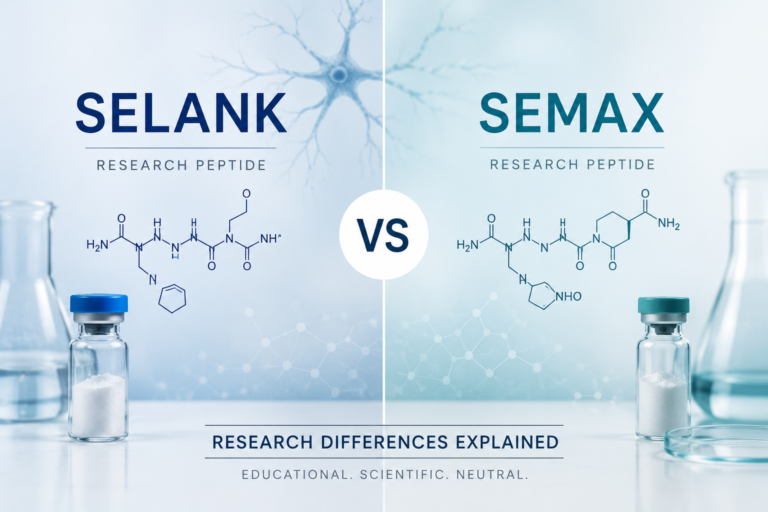
Selank and Semax are synthetic peptides that appear frequently in discussions of neuropeptide and cognitive research. Although they are sometimes…
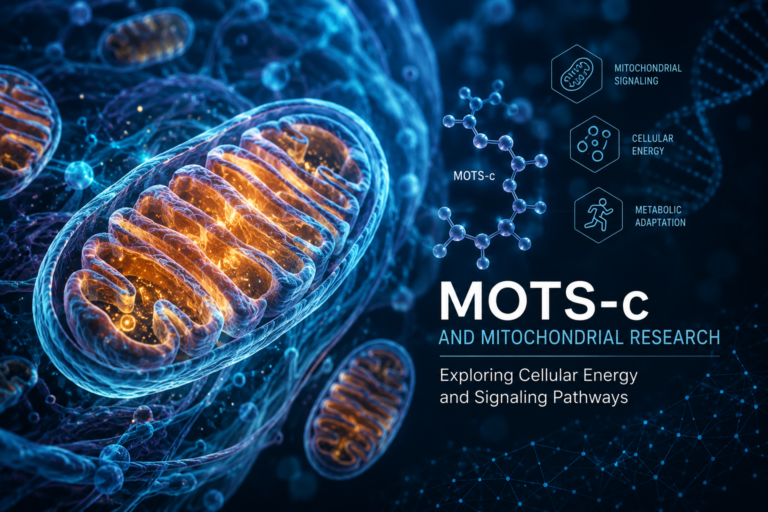
Mitochondria are widely recognized for their central role in cellular energy metabolism, but research increasingly demonstrates that these organelles also…
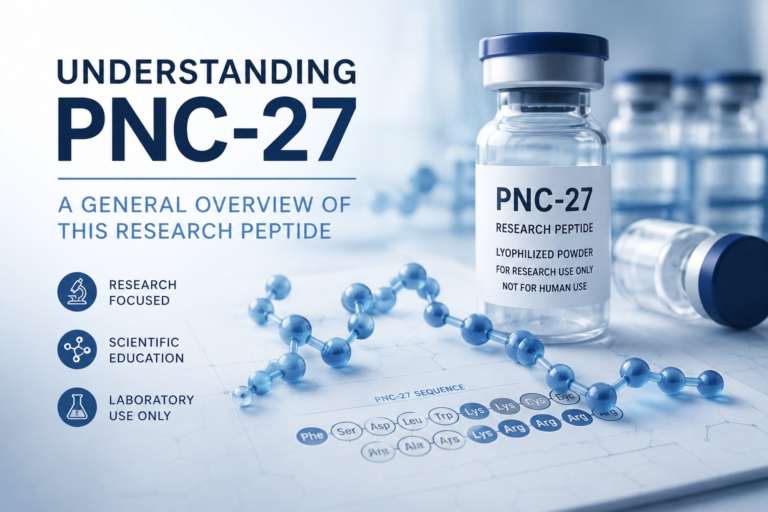
PNC-27 is a synthetic peptide designed from a region of the tumor suppressor protein p53 combined with a membrane-penetrating peptide…